Gardens, Philosophy ... or Gardens & Philosophy ...
... or just two matters that call to be thought together
|
This will become a growing repository of writings on matters intertwining
GARDENS & PHILOSOPHY, including informal pieces on:
|
~~Links~~
|
* * * *
Names or Defining Ideas ... what do the words tell us?
|
Sources informing the etymologies include: The Online Etymology Dictionary (www.etymonline.com), Chambers Dictionary of Etymology, The Shorter Oxford English Dictionary, & additional citations noted below.
|
Trace back from the ca. 13th c.’s Old French jardin, “(kitchen) garden; orchard; palace grounds,”
and one finds
(amongst other similar variations)
the Vulgar Latin *hortus gardnius, “enclosed garden,”
the Old English geard and Gothic gards , “enclosure,”
the Old High German garto, then German Garten, “a garden,”
back to the Proto-Indo-European root: *gher-, “to grasp, enclose:”
and one finds
(amongst other similar variations)
the Vulgar Latin *hortus gardnius, “enclosed garden,”
the Old English geard and Gothic gards , “enclosure,”
the Old High German garto, then German Garten, “a garden,”
back to the Proto-Indo-European root: *gher-, “to grasp, enclose:”
- not to be confused for the root *ghre-, “to grow, become green,” *gher-, “to grasp, enclose,” is related to the Sanskrit ghra-, “house,” Albanian garth, “hedge,” Greek khortos, “pasture,” Phrygian -gordum, “town,” Latin hortus, “garden,” Old Irish gort, “field,” Breton garz, “enclosure, garden,” Old English gyrdan, “to gird,” geard, “fenced enclosure, garden,” German Garten, “garden,” etc.. It is formative of words such as: carol, chorus, cohort, courteous, courtesan, garden, garth, girt, Hildegard, Hortense, horticulture, jardinière, kindergarten, orchard, yard.
|
“Wilderness,” ca. 1200, a “wild, uninhabited, or uncultivated place,” developed from the compounding of the Old English wild-deor, a “wild animal, wild deer,” with -ness. “Wild,” or the Old English wilde is that adjective meaning “in a natural state, uncultivated, untamed, undomesticated, uncontrolled,” ultimately of uncertain origin, through perhaps from the PIE root *welt-, “woodlands, wild.” The same root gives us the related “wold” alternately, in Old English’s Anglian and West Saxon or Kentish, respectively as wald and weald, meant “forest, wooded upland,” which is now really only seen preserved in names, such as the Cotswold. The mid 13th c. saw “wild” implying the “sexually dissolute” and “loose,” and in 1955’s America, its sense of being “exciting, excellent.” Its verb sense, “to run wild, refuse to be tamed” comes from the Old English awildian, which, in the 1520’s, simply mean the noun “plant that grows without cultivation,” and in the 1590’s, “uncultivated or desolate region.”
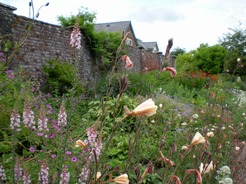 Abbey Dore Garden Abbey Dore Garden
Walled Garden: while the hortus conclusus double stuttered its nature as enclosed, its boundaries were often permeable—hedges, wattles, and so forth—whereas the proper walled garden was encircled with towering brick or stone walls designed to further protect its plant occupants from winds and cold, create a microclimate, absorbing the sun’s heat for evening release, and even its brick walls often having a hollow within where fires could be lit, smoke chimneyed out, so to protect espalier fruit trees or vines from frost, and having squares which could be removed for venting in warmer months.
“Agriculture” comes from the mid-15th c. meaning “tillage, cultivation of large areas of land to provide food” from the Late Latin agricultura, “cultivation of the land,” contracting together agri cultura, or agri, “a field,” and cultura, “cultivation.”
|
“Hortus conclusus,” the Latin for “enclosed garden,” stutters a bit, both words meaning some sort of enclosure (hortus’ root of *gher- means “to grasp, enclose;” conclusus meaning “concluded, finished,” conclude, “to shut up, close, imprison, enclose, confine”). While for gardening, the enclosure is often deemed to have practical value for protection of one’s plants, in medieval art, such walled gardens suggested purity, a virginal impenetrability, often paintings of the Virgin and Child, her womb closed off, unsullied, pure, for her son’s conception was immaculate.* The Song of Songs 4:12: Hortus conclusus soror mea, sponsa, hortus conclusus, fons signatus [“A garden enclosed is my sister, my spouse; a garden enclosed, a fountain sealed up”].
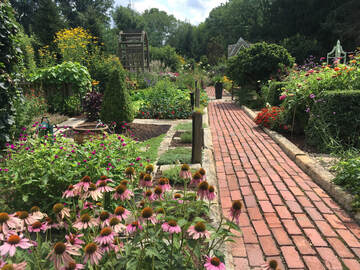
My mother's garden, 2018
“Landscape,” from ca. 1600, was a noun some three hundred years before gaining its verb sense, and for its first roughly 286 years of documented use it was a painter’s term for art “representing an extensive view of natural scenery.” Formed ca. 1600 from the conjunction of land-, ground or soil, one’s home region, and -scap, or -ship, something’s state or condition, “landscape” only gained its non-artistic meaning of a “tract of land with its distinguishing characteristics” in 1886. By 1916 it became the verb meaning “to lay out lawns, gardens, etc., plant trees for the sake of beautification.”
|
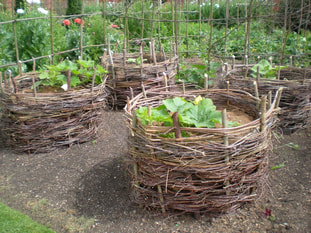 Squash baskets, Hampton Court, 2009
“Cultivation”: When wilderness meets the till, we see the Latin cultivare (“to till, to cultivate,” originally from cultus, “care, labor; cultivation,” itself dating to the PIE root *kwel-, “revolve, move around; sojourn, dwell”) to 16th c. French cultivation, the “raising of a plant or crop,” to “raise or produce by tillage,” and “act or practice of tilling land and preparing it for crops,” which takes on, around 1700, the figurative sense of the “promotion of mental growth or development,” and the “devoting of special attention or study to the development” of some branch of knowledge.
|
“Horticulture” was not recorded in use until the 1670’s as a noun for “cultivation of a garden,” coined from the Latin hortus, “garden,” and likely using the model of “agriculture.”
Quip by Dorothy Parker: “You can lead a horticulture, but you can’t make her think” |
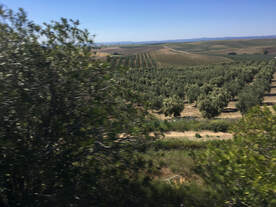
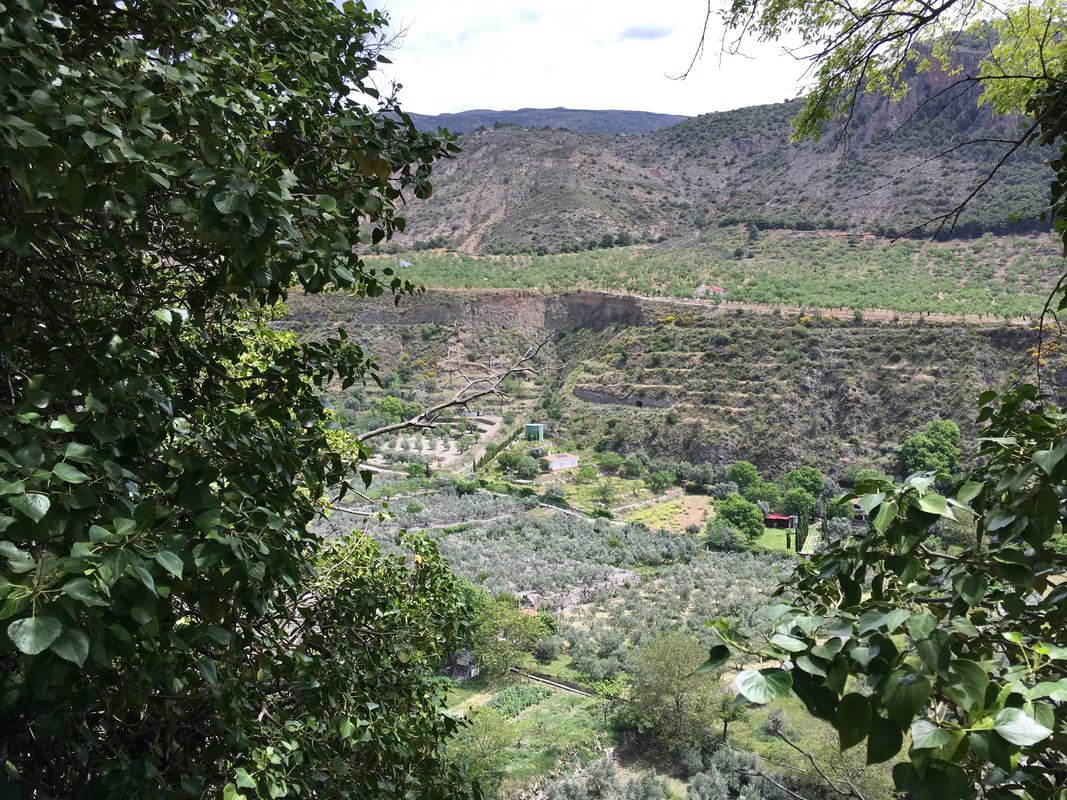
Olives, in Córdoba, Andalusia, Spain, 2019
|
|
“Orchard,” from the late Old English orceard, a “fruit garden” or “piece of ground, usually enclosed, devoted to the culture of fruit-trees,” yet also a place for meeting, recreation, and so forth; its earlier form was ortgeard, perhaps from wortgeard, a compound of wort, from wyrt for “vegetable, plant root,” and geard, “garden, yard” and “vegetable garden.”
“Plant,” as a noun, is from the Old English plante, “young tree or shrub, herb newly planted, a shoot or strip recently sprouted from seed,” from the Latin planta, “sprout, shoot, cutting,” possibly coming from a verb *plantare, “to drive in with the feet, push into the ground with the feet,” or even “to level the earth” by the “sole of the foot,” deriving from the PIE root *plat-, “to spread,” later giving the Old English plantain, to “put or set in the ground to grow.” By the 1550’s, it expanded to name non-tree vegetation more generally. 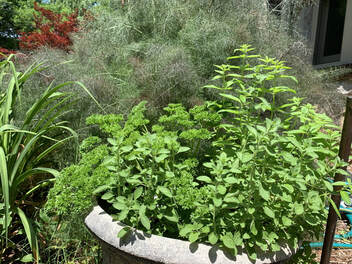
|
“Paradise”: while the late Old English meant by this “the garden of Eden,” as did the Old French, the Late Latin paradisus just as much meant “a park, orchard, and abode of the blessed” from the Greek paradeisos, which compares to the Iranian, Avestan, Persian, and Arabic uses, and is a compound of pairi-, “around,” and diz, “to make, to form (a wall).” Xenophon and others used the Greek for an orchard or royal hunting park in Persia, and the Septuagint took it to mean “the garden of Eden,” and the New Testament translations of Luke 23:43 to mean “the Christian heaven, place where the souls of the righteous departed await resurrection” since ca. 1200 in English and 1400 extended to the Muslim heaven. “Paradise” meaning a “place of extreme beauty, blissful state like or comparable to Paradise” is ca. 1300. Since the late 14th c., the “gates of paradise” meant “the Virgin Mary.”
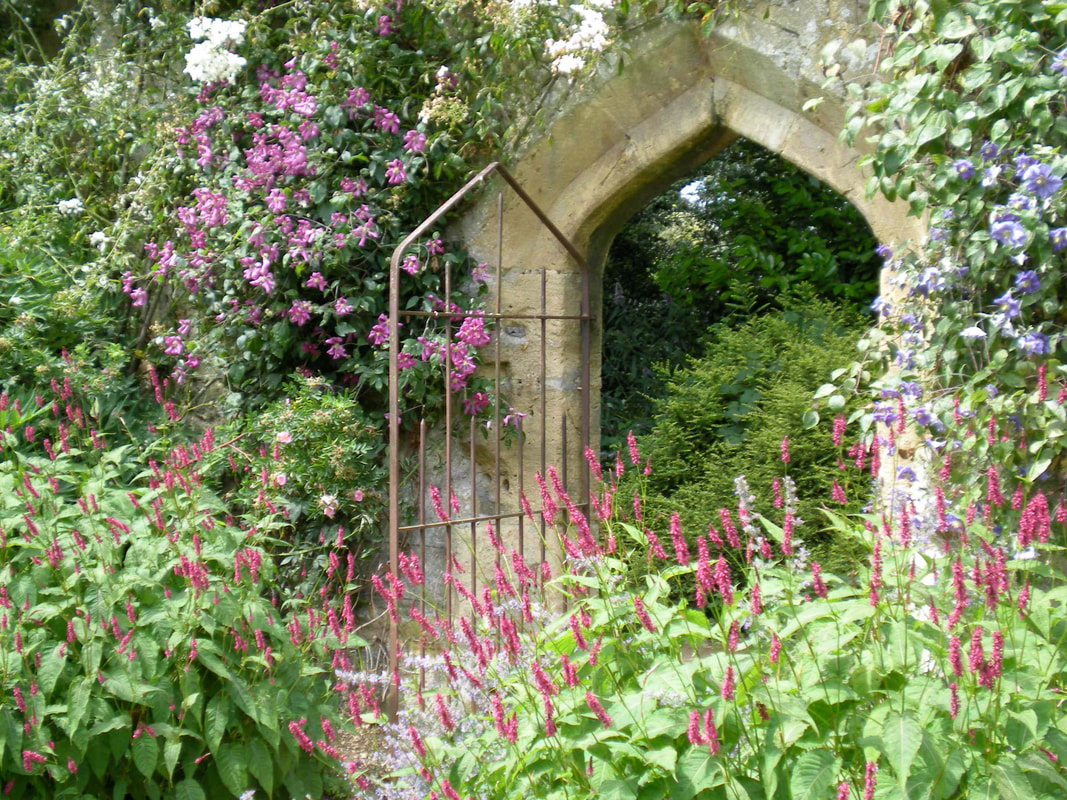
Sudeley Castle, Tithe Barn Ruins
"The history of the word 'paradise', which sounds so familiar to us, is a succession of loans from one language to another, as if the foreign term were for some reason always held to be untranslatable or else one wanted at every cost to avoid its obvious equivalent" |
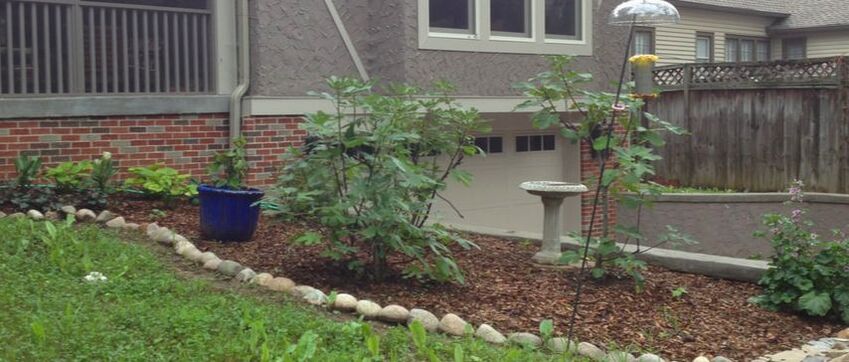
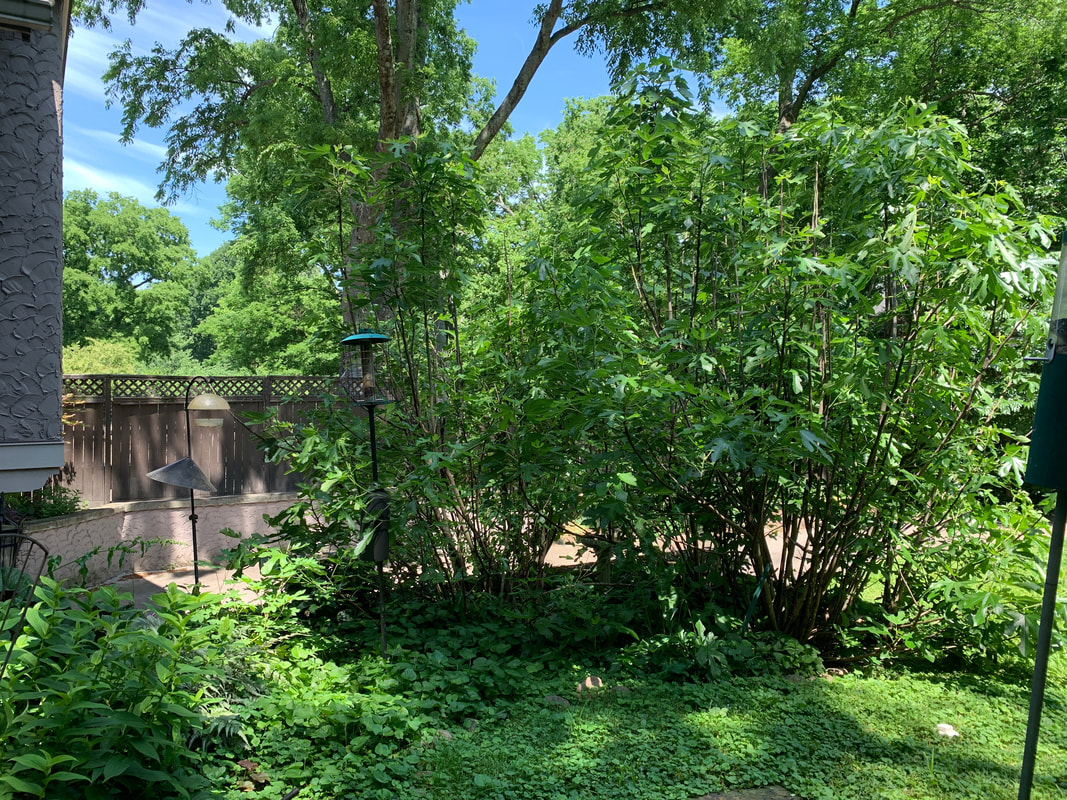
“Herb,” ca. 1300 as erbe, is a “non-woody plant,” most especially an edible leafy vegetable, as in the Old French “grass, herb, plant fed to animals,” from the Latin herba, “grass, an herb, herbage, turf, weeds;” those who study or deal in herbs, an herbalist, is attested in the 1590’s, earlier called herber, especially as a surname ca. early 13th c., by the 1540’s herbarian, herbarist, herb-man, and herbary, then herbarian from the 1570’s, and the feminine herb-wife in the 1580’s. An herbal, from the Latin herbalis, as a “book that names and classifies plants,” is since the 1510’s.
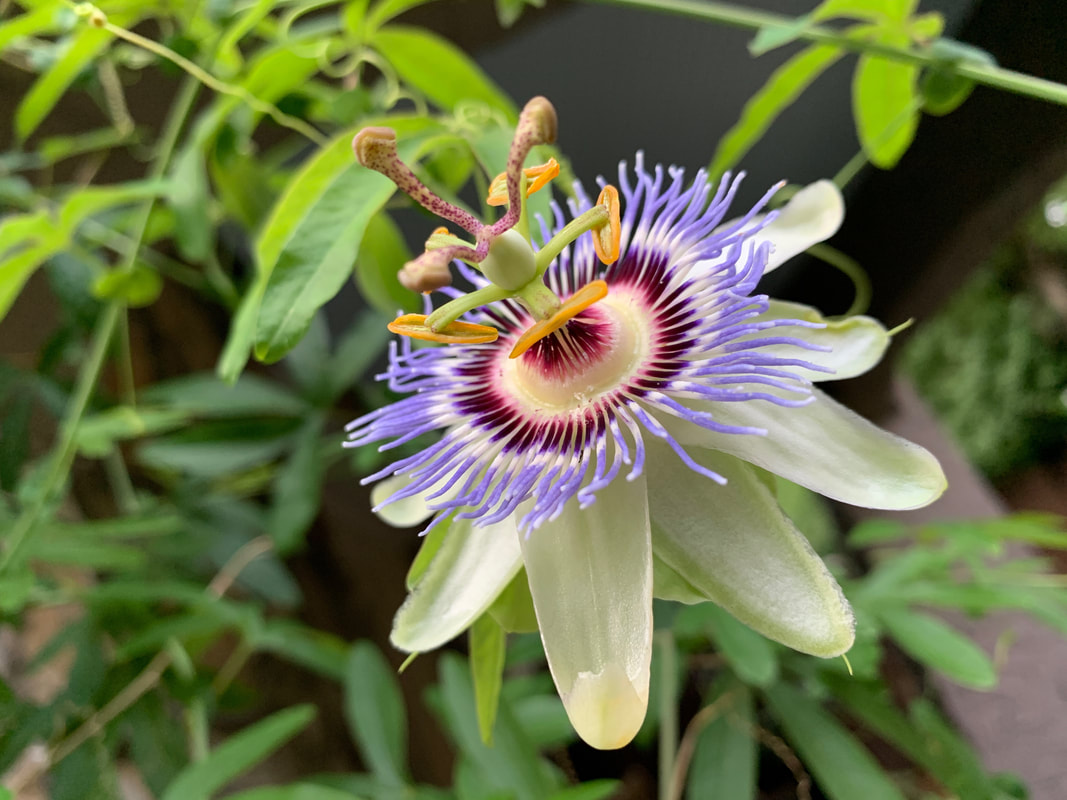
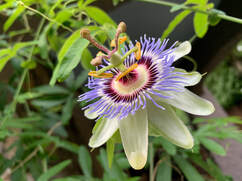 passion flower passion flower
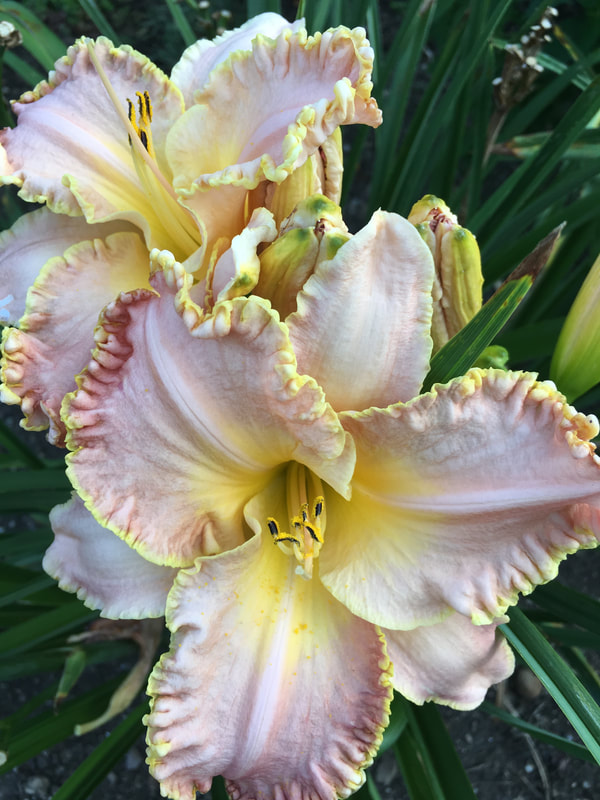
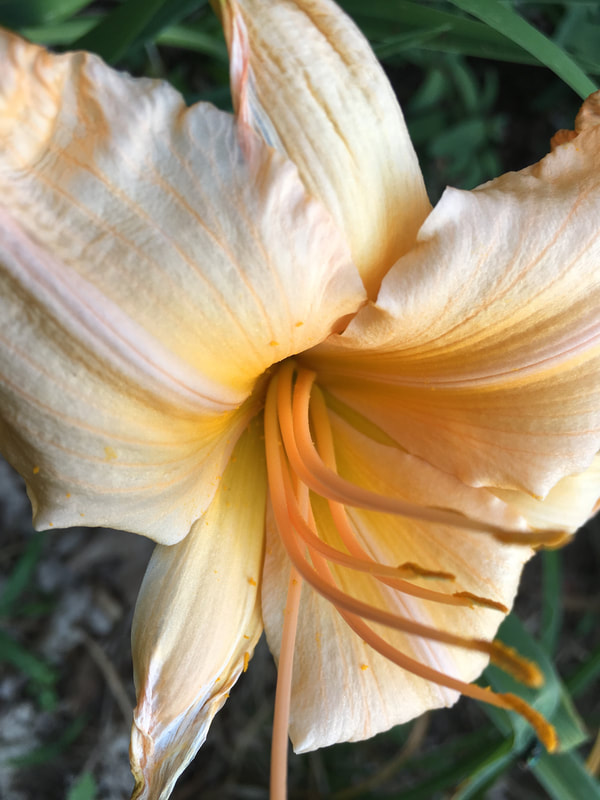
“Flower,” ca. 1200, “the blossom of a plant, a flowering plant” comes to us through the Modern, 12th c., French fleur from Old French flor, “flower, blossom; heyday, prime; fine flour; elite; innocence, virginity,” the Latin florem, “flower,” and the PIE root *bhel-, “to thrive, bloom.” More figuratively, any state likened to the height of a plant’s flowering state, we have expressions like the late 14th c.’s “blossoming time,” that prime of one’s life, or the earlier 13h c.’s “embodiment of an ideal,” or something at the “best, most excellent” state or nature of its kind, like cream as the “flour of milk” (the late 14th c. flour becoming thereafter flower). Similarly, “flower” as “blossom of a plant” (blossom developing from Old English blostm) designating transitoriness in the early 14th c., as well as “virginity,” and “a beautiful woman” ca. 1300, with its earlier, ca. 1200, verb form “to be vigorous, prosper, thrive.”
|
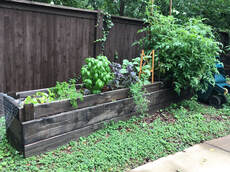 A raised bed of veggies A raised bed of veggies
“Arbor,” ca. 1300, or herber, “herb garden, pleasure garden,” from the Old French erbier, “field, meadow, kitchen garden,” from the Latin herba, “grass, herb;” later, meaning “a grassy plot” in the mid-14th c., a “shaded nook, bower formed by intertwining of trees, shrubs, or vines.” Despite how it may seem, connection is not to the Latin arbor or “tree.”
“Curtilage,” ca. 1300, “vegetable garden,” its root in the Latin cortis, “court, yard,” to the Old French’s cortil, “little court, walled garden, yard,” and then courtillage, and to the Anglo-French curtilage. 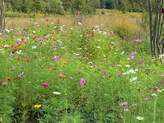 Holden Arboretum, Ohio Holden Arboretum, Ohio
“Karmel” in the Hebrew (and Greek Karmel, Latin Carmel) means “garden, fertile field.
|
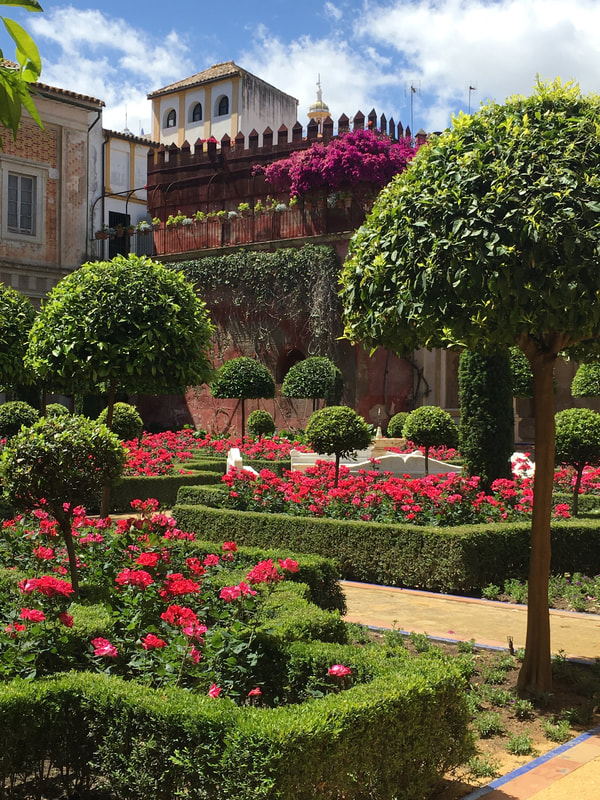
Seville, Andalusia, Spain
|
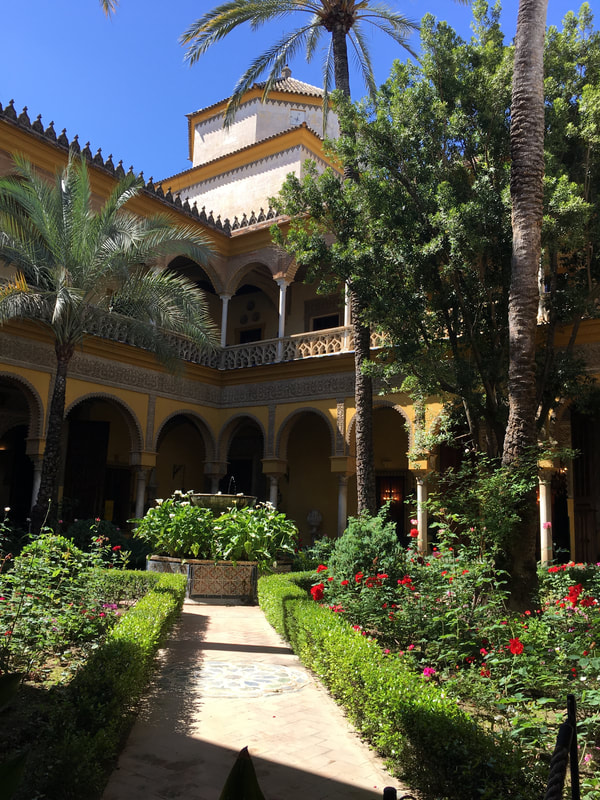
Seville, Andalusia, Spain
|
|
|
|
|
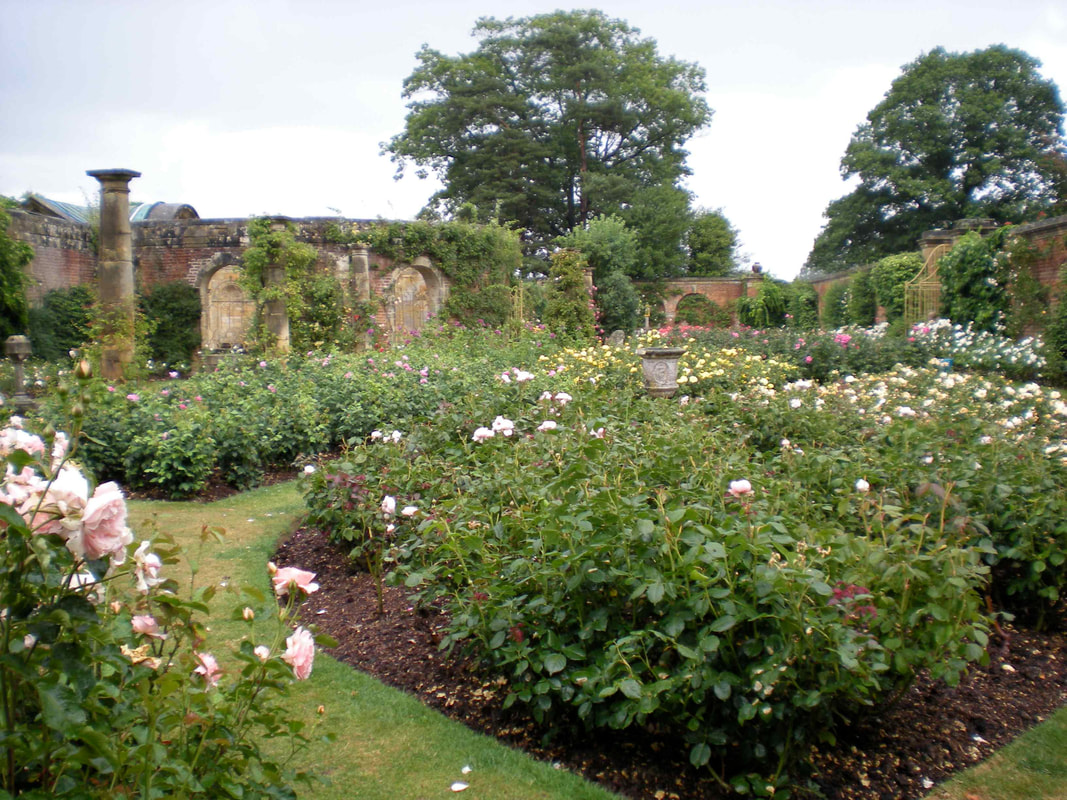
Hever Castle Rose Garden
|
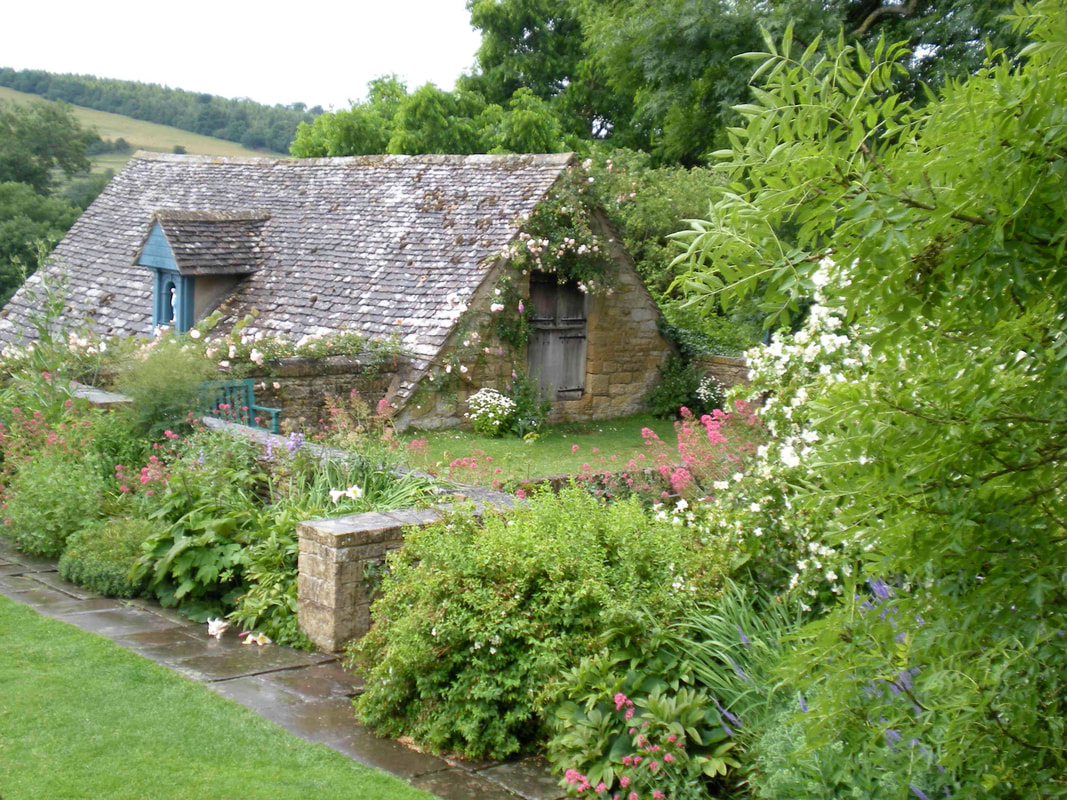
Snowshill Manor Garden
|
|
|
|
|